Why work is the best place to start being more sustainable

World Environment Day is 5 June. Here's why work — with its routines and repetition — is the best place to build sustainable habits that actually stick, and a short, NZ-built course to help your team start.
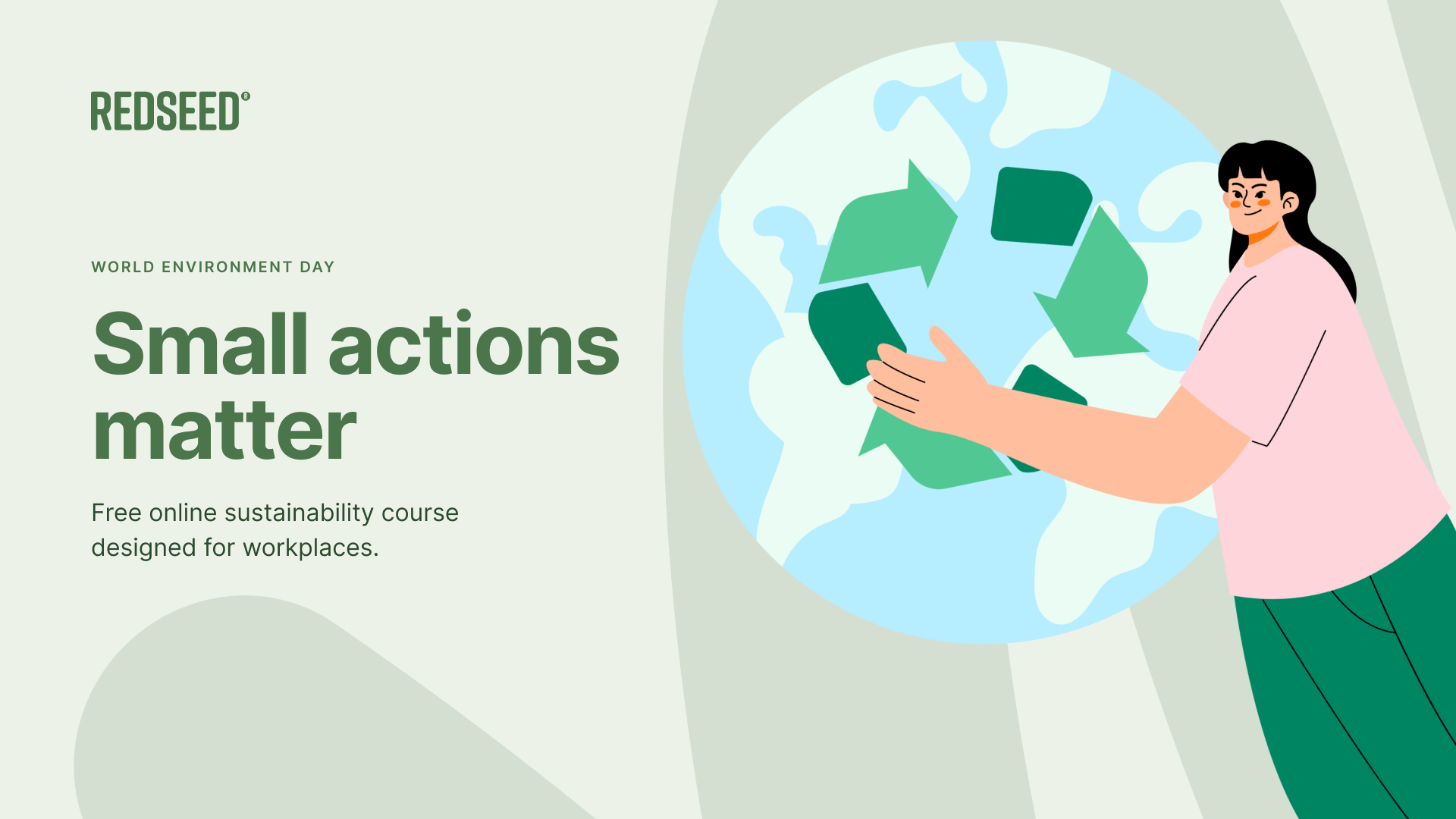
RedSeed World Environment Day banner. Headline: "Small actions matter — free online sustainability course designed for workplaces." Illustration of a smiling woman holding a green recycling symbol in front of the Earth.
X
minute read

This World Environment Day, help your team build sustainable habits that actually stick — free.

World Environment Day lands on 5 June every year. It's the United Nations' biggest day for encouraging awareness and action on our environment. And every year, it's a good moment to stop and ask yourself: what am I actually doing?

Not in a guilt-trip way, but in a genuinely useful, check-in kind of way.

On varying levels, most people care about the environment. But caring and doing are two very different things, and the gap between them is where good intentions quietly disappear.

This World Environment Day, let's focus on something practical. Not the overwhelming, save-the-whole-planet kind of practical. The real, everyday kind. And specifically, why your workplace might be the best place to start.

Aotearoa, let's be honest

New Zealand has a great 'clean and green' reputation, rooted in a history of standing up for environmental issues. But today, sadly, the numbers tell a different story.

Two-thirds of our rivers are now too polluted to swim in. New Zealand sits in the top 5 in the OECD for road transport emissions per person. Around 12.6 million tonnes of waste end up in landfill every year. And if everyone in the world lived like the average New Zealander, we'd need 3 planets to keep up.

3 planets. We've got 1.

None of that is meant to make you feel bad. It's meant to remind you that you have a role to play. You do. And World Environment Day is as good a reason as any to step into it.

Why at work?

You spend a big chunk of your waking hours at work. You follow the same routines, move through the same spaces, and interact with the same people, day after day.

That repetition is one of your biggest advantages when it comes to building new habits. The more often you do something in a familiar environment, the faster it becomes automatic. You already know this from experience. Think about how quickly "I'll just check my emails when I sit down" became something you do without thinking.

The same thing happens with eco-smart behaviours. Turning off the lights when you leave a room. Rinsing a container before recycling. Remembering your reusable cup for morning coffee. Do these things at work often enough, and they stop feeling like effort. They just become what you do.

The people around you notice, too. One person shifts their habits, others follow, and before long, you've changed what feels normal across your whole team. You don't need a green committee or a corporate sustainability policy to make that happen. You just need to start.

It's not always going to be easy

Change is hard. That's just the truth.

Sometimes you forget your reusable cup. Sometimes the recycling rules feel confusing enough that you just give up and chuck everything in the general waste. Sometimes you're tired, and it all just feels like too much.

Those moments don't mean you've failed. They're part of how change works. What matters is what you do next. Here are some tips to help you.

  • Lost your motivation? Go back to your reason for starting. Why does this matter to you? Maybe it's your local beach. Maybe it's your kids. Maybe it's just a quiet sense that it's the right thing to do. That reason is worth keeping close.
  • Keep forgetting? Stop relying on memory and set up your environment instead. Put your keep-cup next to your keys the night before. Stick a note on your screen or a reminder on your phone. The right choice becomes a lot easier when you've set yourself up for it.
  • Feel like it's pointless? Your actions are more visible than you think. When a team member sees you check your rubbish before throwing something away, or notices you walking to a meeting instead of driving, something shifts for them too. You're not just reducing your own footprint. You're quietly changing what feels normal around you.
  • Overwhelmed? Pick one thing. One action, done consistently, will always beat a long list of things you tried once and abandoned.

Where to start

You don't need to be an expert. You just need a few good starting points.

  • Your waste habits. Because spending and waste often go hand in hand, before you get out your wallet, stop and think about the waste that purchase might create. Will it end up as rubbish after one use? Could you choose an option with less packaging, something reusable, or something that lasts longer? And before you throw something away, ask yourself: could it be reused, repaired, or recycled instead? If it does need to go to landfill, think about what you could do differently next time to avoid creating that waste again.
  • Your energy use. If something is on and doesn't need to be, turn it off. Your computer at the end of the day. The lights in an empty meeting room. The heat pump running in a space no one is using.
  • Understanding stormwater. This one surprises most people. Stormwater runs off hard surfaces directly into rivers and the ocean, without any treatment. What sits near a drain matters. Check for leaks. Pick up loose rubbish around your work. Never rinse chemicals outside.
  • Your workplace travel. More than half of car trips in New Zealand are under 5km. That's a walkable or bikeable distance for a lot of people. Could you carpool once a week? Could that in-person meeting be a video call? Small reductions in how often and how far you travel add up faster than you'd expect.

A course built for this

We've just released Being Eco-Smart at Work, a short course designed to help people across Aotearoa understand the impact of their everyday work habits and make practical, meaningful changes.

Here's what it covers:

  • The real picture for New Zealand. This course doesn't talk about climate change as some distant global issue. It brings it home to Aotearoa, focusing on what's happening here right now and unpacking some of the common myths and misunderstandings people still have.
  • Workplace waste. You'll learn how the waste hierarchy works and how to apply it in practical ways every day at work. That includes a clear breakdown of what belongs in the green, yellow, and red bins because, honestly, most of us are getting at least some of it wrong.
  • Energy use. Small habits can make a big difference. The course covers simple, practical ways to reduce energy use through heating, lighting, and equipment use without needing expensive upgrades or renovations.
  • Stormwater care. You'll learn what stormwater actually is, why it matters, and how everyday workplace activities can impact local waterways. More importantly, you'll walk away with straightforward actions that help protect them.
  • Travel. From commuting to meetings and site visits, travel is one of the biggest contributors to many people's environmental footprint. This course helps you identify realistic ways to reduce yours without making work harder.
  • Making change stick. This is what sets this course apart from the rest. It doesn't just give you information and leave you to figure out the rest. It helps you create a practical action plan, build better habits, stay motivated when things get busy, and create accountability so the changes actually last.

What makes it worth your team's time

For team members, this course meets you where you are right now. It doesn't assume you're already eco-conscious or that you have hours to spare. It's honest about how hard behaviour change can be, and it gives you tools that work in real life, not just in theory. You'll finish with a clear sense of what you can do and how to make it last.

For managers and leaders, the value is simple. Sustainable workplaces aren't built through posters, policies, or the occasional reminder email. They're built when people understand the impact of their actions and are supported to make better choices consistently. This course helps build that understanding while also giving leaders practical ways to make sustainable behaviours the easy option through systems, workplace design, and leading by example.

It's short enough to fit into a busy day. It's practical enough to actually change behaviour. And it's built for New Zealand workplaces, with local context and data, and real relevance.

Being Eco-Smart at Work is available now. Jump into the course today and start building habits that make a real difference.

Published by:

Emily Gibson

Instructional Designer

This World Environment Day, help your team build sustainable habits that actually stick — free.

Continue reading...

Thank you! Your submission has been received!
Oops! Something went wrong while submitting the form.

Search

You can search the RedSeed website by entering search terms below.